The Complete Guide to Cat Litters: How to Choose the Right One for Your Feline
- petparadise959
- Nov 19, 2025
- 4 min read
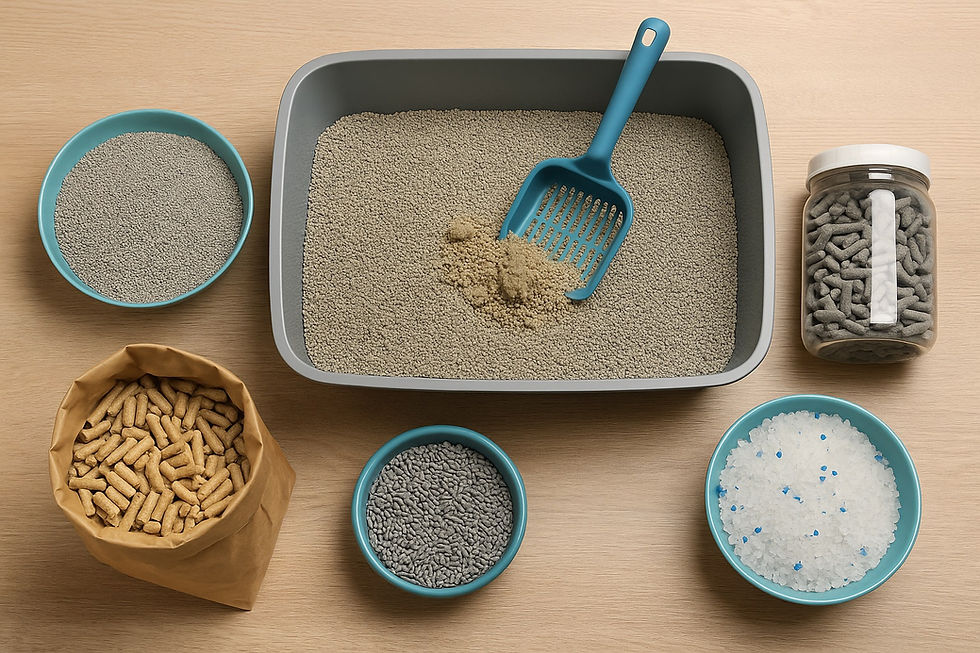
When you live with a cat, one thing quickly becomes clear—cat litters matter more than we think. The right litter keeps your home smelling fresh, your floors clean, and your cat happy. The wrong one? Dust, mess, and a very annoyed kitty.
This friendly, easy-to-follow guide will help you understand different types of litter, how to choose the best cat litter for your home, and what real cat parents (including myself!) have learned through experience.
Why Choosing the Right Litter Matters
Cats are naturally clean animals. A dirty, uncomfortable, or smelly litter box can stress them out, lead to accidents, or even cause health issues. That’s why picking the best cat litter isn’t just about convenience—it’s about your cat’s comfort and well-being.
Types of Cat Litter (and Which One Works Best)
Every cat has a preference, just like humans do with bedding or shoes. Understanding litter types helps you match the box to your cat’s needs.
1. Clumping Clay Litter
This is the classic choice. It forms tight clumps when wet, making scooping easier.
Pros:
Easy daily maintenance
Helps control odor
Widely available
Cons:
Can be dusty
Some cats track it around
Real-life note: My own cat preferred clumping clay for years until she developed mild dust allergies. That’s when I switched to a low-dust formula—and the sneezing stopped!
2. Non-Clumping Clay Litter
A budget-friendly option often used in multi-cat households.
Pros:
Affordable
Good absorption
Cons:
Needs more frequent changes
Less odor control
3. Crystal or Silica Gel Litter
A premium, low-maintenance option many cat parents adore.
Pros:
Highly absorbent
Amazing odor control
Very low dust
Cons:
Some cats dislike the texture
Can be more expensive
4. Plant-Based or Natural Litter
Made from corn, wood, wheat, pine, or recycled paper.
Pros:
Eco-friendly
Low dust
Lighter than clay
Cons:
Odor control varies
Some cats take time to adjust
Tip from experience: Kittens often do great with natural paper litter because it’s soft and gentle on tiny paws.
How to Choose the Best Cat Litter for Your Home
Choosing the best litter isn’t difficult—just keep these simple factors in mind.
1. Odor Control
Cats have sensitive noses. A strong ammonia smell is a sign you need:
Better quality litter
More frequent scooping
A deeper clean of the litter box
2. Dust Level
If your cat sneezes or you notice dust clouds while pouring, switch to a low-dust or dust-free option.
3. Texture
Cats prefer fine, sandy textures because they mimic natural soil. However, senior cats or declawed cats may need softer textures.
4. Tracking
If your floors constantly have small grains, choose:
Larger-pellet litters
A litter mat
Low-tracking formulas
5. Environmental Impact
Eco-conscious households love plant-based litters because they’re biodegradable and lighter to carry.
How Often Should You Change the Litter Box?
Keeping the box clean is just as important as choosing the right litter.
Daily
Scoop waste
Shake the box gently to refresh the top layers
Weekly
Replace litter entirely
Wash the box with mild soap
Multi-cat homes
Clean more frequently. Cats prefer a tidy, low-stress space.
Signs Your Cat Doesn’t Like the Litter
Cats communicate with behavior more than meows. Watch out for:
Scratching outside the box
Covering behavior longer than usual
Peeing near the box instead of inside
Meowing while eliminating
Avoiding the box altogether
A simple switch of texture or type often solves the problem.
Setting Up the Perfect Litter Box Area
Small changes can make your litter setup smoother and cleaner.
Choose the Right Box:
Large enough for your cat to turn around
Low entry for seniors or kittens
Covered or uncovered based on preference
Location Matters:
Quiet
Accessible
Away from food and water
Not in a noisy laundry area
Use Helpful Accessories:
Litter mat
Covered bin for waste
Litter liners (optional)
Real-Life Examples from Cat Parents
Example 1: The Multi-Cat Household
A family with three cats switched to a high-absorbency silica litter. Result? Less odor, fewer weekly changes, and happier cats.
Example 2: The Allergy-Sensitive Cat
A kitten with respiratory issues improved after switching from clay to dust-free paper pellets.
Example 3: The Budget-Friendly Setup
A cat parent mixed natural litter with clay for affordability and better odor control—an easy trick that actually works!
How to Maintain Freshness with Cat Litters
Keeping the litter box fresh doesn’t require expensive products. Try these simple tips:
1. Scoop Twice a Day
Especially if you have more than one cat.
2. Deep Clean the Box Weekly
A fresh start prevents lingering odors.
3. Replace the Box Every 6–12 Months
Scratches inside the box can trap bacteria.
4. Use Baking Soda
A sprinkle under the litter layer helps control smell naturally.
5. Try a Litter Deodorizer
Optional, but useful for high-traffic homes.
Best Cat Litter Alternatives (If Your Cat Is Picky)
You can experiment safely with:
Paper pellets
Tofu litter
Pine pellets
Wheat-based litter
Mixed formulas
Introduce new types gradually by mixing 70/30 until your cat adjusts.
Common Mistakes to Avoid
Here are things many cat parents do without realizing:
Using scented litter that’s too strong
Changing litter brands abruptly
Not providing enough litter boxes
Cleaning with strong chemicals
Ignoring behavioral signs
A happy cat = a clean box + a litter they enjoy.
FAQs About Cat Litters
1. How many litter boxes should I have?
The rule is simple: One box per cat, plus one extra. This helps reduce stress and prevents accidents.
2. What is the best cat litter for odor control?
Silica crystal and clumping clay are known for strong odor control, but the “best cat litter” depends on your cat’s preference and your home environment.
3. Why does my cat stop using the litter box suddenly?
Reasons include:
Dirty box
Pain or urinary issues
Stress
Dislike of litter type If it continues, check with a vet.
4. How deep should the litter be?
Most cats prefer 2–3 inches. Too much litter can cause tracking, while too little won’t absorb odors properly.
5. Can I switch between different types of cat litters?
Yes! Just do it gradually to avoid confusing your cat. Mix old and new litter for a smoother transition.
Conclusion
Choosing the right cat litters isn’t just about keeping your home clean—it’s about creating a safe, comfortable space for your feline companion. Whether you prefer clay, natural, or crystal options, the best choice is the one that works for both you and your cat. Keep the box clean, try different textures if needed, and watch your cat’s behavior for clues.
A little care goes a long way toward a happy cat and a fresher home.


Comments